

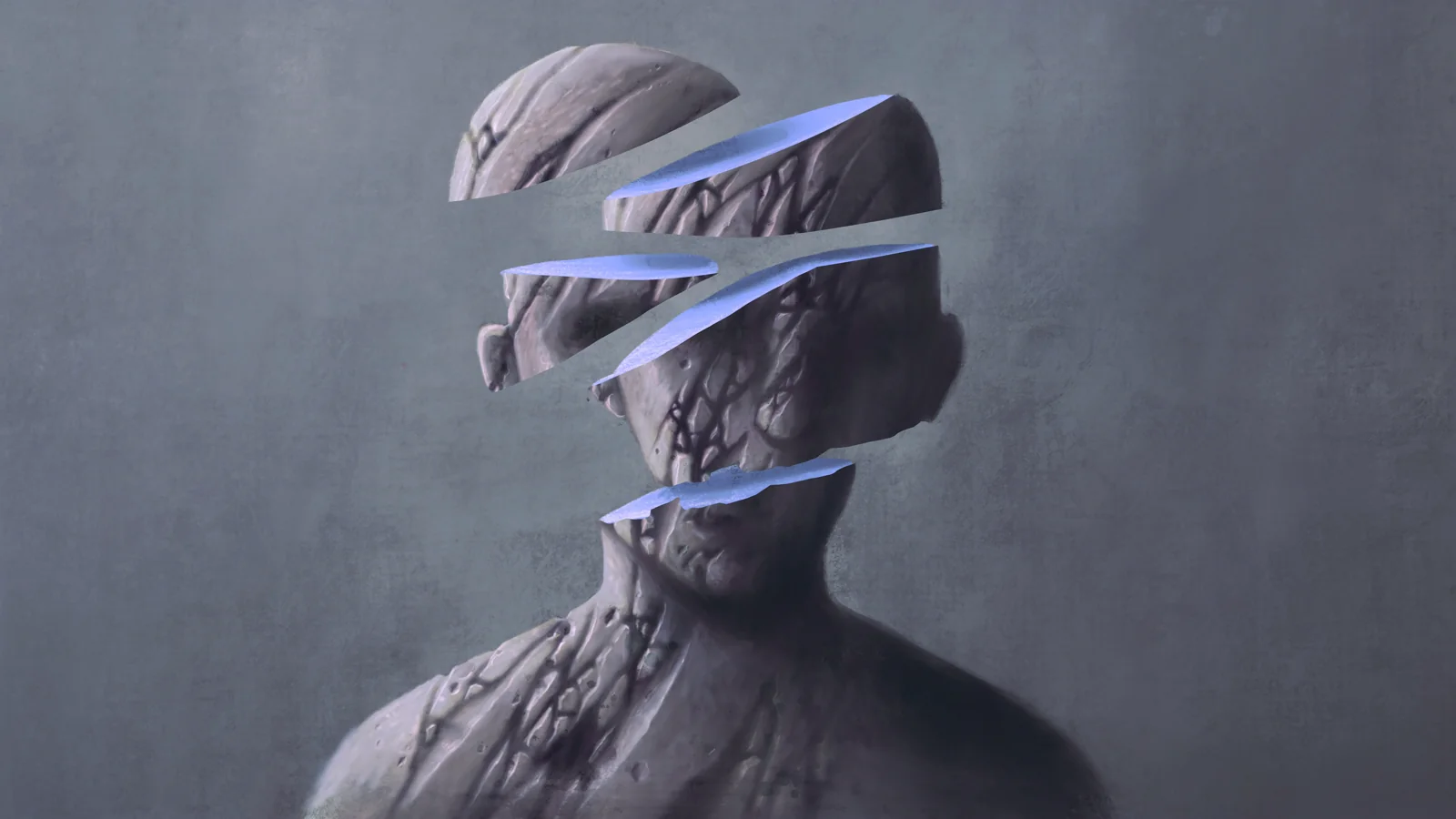
Jungian archetypes are recurring forms and motifs that Carl Jung used to think about patterns in dreams, myths, relationships, and psychological life. However, they are not the same thing as personality types, fictional characters, or a quiz result. The familiar list of 12 archetypes is a later framework created by Carol S. Pearson, then adapted with Margaret Mark for branding. In other words, it is Jungian-influenced, but Jung did not publish that fixed list.
Written by Dr. Dragomir Kojic, Doctor of Psychotherapy Science and Jungian analyst
Updated July 21, 2026 · How we review content
On this page
- Jungian archetypes in 60 seconds
- What is a Jungian archetype?
- Are there 12 Jungian archetypes?
- The 12 popular Jungian archetypes, explained carefully
- Why broad Jungian archetype descriptions can feel unusually personal
- Jung’s broader archetypal figures
- Archetype, archetypal image, complex, and personality type
- How Jungian archetypes may appear in daily life
- A grounded five-step method for working with Jungian archetypes
- Are Jungian archetypes scientific?
- Can a Jungian archetype test tell you who you are?
- Frequently asked questions
That distinction solves much of the confusion online. In practice, you can use the popular 12 as a vocabulary for motives and recurring roles without pretending they are Jung's complete inventory or a validated diagnosis. You can also go deeper into the figures Jung actually discussed, including the shadow, persona, Self, anima and animus, mother, child, hero, trickster, and wise old person.
In short, this guide explains both layers, shows where the 12 came from, and gives you a grounded method for exploring an archetypal pattern without turning metaphor into fact.
Jungian archetypes in 60 seconds
- In Jung's theory: archetypes are underlying possibilities or organizing patterns, not inherited pictures with fixed content.
- What we encounter: culturally and personally shaped archetypal images, such as a guide, child, adversary, mother, trickster, or hero.
- The famous 12: a later system developed by Carol S. Pearson, not a canonical list from Jung.
- What an archetype is not: a diagnosis, a permanent identity, or scientific proof of a hidden cause.
- Best use: treat the pattern as a hypothesis, connect it to a specific situation, and compare it with ordinary explanations.
What is a Jungian archetype?
Jung used the term in several ways across his career, which is one reason simple definitions become misleading. Therefore, a careful summary is that an archetype is a proposed tendency to organize experience into recurring human patterns. Jung distinguished the unknowable archetype itself from the images, stories, emotions, and behaviors through which people encounter it.
The difference between an archetype and an archetypal image matters. For example, a mother, king, child, snake, or doorway in a dream is not automatically an archetype with a universal dictionary meaning. It is an image shaped by the dreamer's life, culture, associations, and immediate circumstances. The archetypal claim concerns a broader form or motif that may organize such images.
The Jung Lexicon summarizes Jung's view that archetypes are not inherited ideas but possibilities for forming ideas. An International Association for Analytical Psychology paper on archetype also emphasizes that Jung's usage changed and that contemporary analytical psychology contains several interpretations. Therefore, “archetype” names a theoretical lens, not an object that researchers can directly observe in the way they can measure heart rate or reaction time.
For more context, read our guide to Jungian psychology for the wider map of shadow, persona, complexes, individuation, and the Self.
Are there 12 Jungian archetypes?
There are 12 archetypes in Carol S. Pearson's influential framework. However, there are not exactly 12 archetypes in Jung's writings.
Pearson explains on her official history of the 12-archetype system that she first developed a six-archetype model in The Hero Within, then expanded it to 12 in Awakening the Heroes Within. Her system was designed for personal and developmental work. Later, Margaret Mark and Pearson adapted versions of the framework for branding in The Hero and the Outlaw. The names also change slightly across applications. For example, an archetype may be called Orphan, Regular Guy/Gal, Realist, or Member depending on the context.
So the fair conclusion is not “the 12 are fake.” It is this:
- Pearson's 12 are a later Jungian-influenced model.
- The model can provide a memorable language for motives and roles.
- It should not be misattributed to Jung or treated as his complete theory.
- A 12-type result should not be confused with a clinical or psychometric diagnosis.
The 12 popular Jungian archetypes, explained carefully
Different Pearson-based systems use different names. The tables below use the labels most readers now encounter online. In addition, the final column describes a possible rigid or one-sided expression. These are reflection prompts, not findings about everyone who identifies with a type.
Types centered on stability, belonging, and action
| Popular archetype | Central concern | Constructive contribution | When the pattern becomes rigid |
|---|---|---|---|
| Innocent | Safety, trust, hope | Optimism, simplicity, renewal | Denial, avoiding necessary complexity |
| Everyperson | Belonging, equality | Solidarity, realism, lack of pretension | Self-erasure, conformity, resentment of difference |
| Hero | Mastery through challenge | Courage, competence, persistence | Manufacturing battles, contempt for vulnerability |
| Caregiver | Protection and service | Generosity, reliability, practical care | Martyrdom, control through helping, hidden scorekeeping |
| Explorer | Freedom and discovery | Independence, curiosity, willingness to leave the false | Chronic non-commitment, escape mistaken for authenticity |
| Rebel or Outlaw | Change through disruption | Resistance to harmful rules, reform, liberation | Destruction as identity, opposition without direction |
Types centered on connection, expression, and transformation
| Popular archetype | Central concern | Constructive contribution | When the pattern becomes rigid |
|---|---|---|---|
| Lover | Intimacy, beauty, devotion | Connection, appreciation, emotional presence | Losing the self in another, approval-seeking, jealousy |
| Creator | Making something original and enduring | Imagination, craft, expression | Perfectionism, protecting the work by never finishing it |
| Jester | Play and immediacy | Humor, perspective, relief from rigidity | Deflection, cruelty disguised as a joke, avoiding grief |
| Sage | Truth and understanding | Clarity, discernment, long-range thinking | Analysis as avoidance, detachment from lived experience |
| Magician | Transformation and possibility | Reframing, synthesis, helping change take form | Manipulation, grandiosity, promises that outrun evidence |
| Ruler | Order, responsibility, stewardship | Coordination, standards, durable structures | Compulsive control, status defense, intolerance of uncertainty |
Several rows may feel familiar. Still, that does not mean a test failed, and it does not prove that one row is your essence. Human motives overlap. Roles also change by situation. For example, someone may rely on a Ruler pattern at work, a Caregiver pattern with family, and an Explorer pattern when imagining a different life.
Instead, the useful question is often not “Which one am I?” but “Which pattern is active here, what does it help me do, and what happens when I cannot put it down?”
Why broad Jungian archetype descriptions can feel unusually personal
Some archetype descriptions use statements that apply to many people: you value freedom but also want belonging; you have unused potential; you can be social in some situations and private in others. As a result, people can experience broad, favorable descriptions as uniquely accurate. Psychology calls this the Forer effect or Barnum effect.
In Bertram Forer's 1949 classroom study, students rated the same general personality description as though it had been individually derived. Therefore, that finding supports skepticism toward vague personal reports. However, it does not prove that every archetype framework, interpretation, or assessment works only through the Forer effect.
Use a practical test instead. Ask:
- Does the description include behavior specific enough to verify?
- Does it describe conditions under which the pattern does and does not appear?
- Does it allow evidence against the interpretation?
- Does it avoid flattering certainty and claims about hidden causes?
- Does it help you make a useful, low-risk change?
In other words, feeling recognized can begin reflection. However, it should not end evaluation.
Jung's broader archetypal figures
Jung discussed many recurring figures and motifs rather than presenting a closed menu of personality identities. Below are some of the most important in his work and later analytical psychology.
The shadow
The shadow concerns qualities, feelings, wishes, and capacities that do not fit the conscious identity. It can include anger, envy, dependency, and aggression. However, it can also include play, authority, tenderness, creativity, or ambition that a person learned not to claim. Our complete shadow work guide explains the concept, evidence limits, and a practical method.
The persona
The persona is the socially adapted face through which a person meets roles and expectations. A persona is not simply false. After all, work, parenting, friendship, and public life require different forms of presentation. Problems arise when a necessary role becomes the only identity a person can inhabit.
The Self
In Jung's theory, the Self represents the psyche as a whole and the organizing direction of individuation. However, it is not interchangeable with the everyday ego or with self-esteem. Images of centers, circles, mandalas, or wise figures may sometimes be interpreted in relation to the Self, but no symbol has one automatic meaning.
Anima and animus
Jung used anima and animus for inner figures associated with the psychological “other” and developed them through the gender assumptions of his era. By contrast, contemporary readers and clinicians often reinterpret the ideas more flexibly, focusing on projection, disowned capacities, and inner otherness rather than fixed male-female rules. See our anima and animus guide for the historical model and its limitations.
Mother and father
Jungian writing distinguishes a broad archetypal pattern from a personal complex. For example, the mother archetype concerns imagery of origin, nourishment, protection, and engulfment. Meanwhile, the father archetype often concerns authority, order, law, guidance, and demand. By contrast, a person's mother complex or father complex develops through actual relationships and personal history. Therefore, an archetypal interpretation must never erase what a real caregiver did or failed to do.
Child
The child can symbolize vulnerability, potential, dependence, renewal, or something still developing. Still, it should not be reduced to a wounded younger self. Our inner child guide separates a useful reflective practice from claims about memory recovery or universal childhood causes.
Hero
The hero motif centers on meeting obstacles, leaving familiar conditions, and developing capacity through an ordeal. On one hand, it can support courage. On the other hand, it can make ordinary limits feel like enemies and turn life into a permanent test.
Trickster
The trickster crosses boundaries, breaks rules, reverses status, and exposes contradictions. Humor and disruption can loosen a rigid system. However, they can also become excuses for irresponsibility or cruelty. Context decides whether disruption serves renewal or merely creates damage.
Wise old person, puer, and senex
Images of a guide or wise elder may carry meaning, judgment, or orientation. Similarly, the puer and senex describe a polarity between youthful possibility and mature structure, each with constructive and rigid expressions. The puer aeternus and senex guide examines that tension without turning it into a label for a whole person.
Even so, this is not a complete inventory. Jung wrote that archetypal forms relate to typical human situations, which makes a final numbered list difficult to defend.
Archetype, archetypal image, complex, and personality type
| Term | What it refers to | Example |
|---|---|---|
| Archetype | A proposed underlying form or organizing possibility in Jung's theory | A broad child, mother, hero, or shadow pattern |
| Archetypal image | A particular image through which a pattern appears | The specific child, queen, stranger, or guide in one dream |
| Complex | An emotionally charged cluster shaped by personal experience | A recurring reaction to criticism or authority |
| Personality type | A classification based on traits, preferences, or another model | A result from a type questionnaire |
The categories can overlap in conversation, but they answer different questions. For instance, calling someone “the Hero” may describe a role. Nevertheless, it does not establish an archetype, measure a stable trait, or explain the person's history.
How Jungian archetypes may appear in daily life
Above all, archetypal language becomes more useful when it stays attached to actual events.
In relationships
A couple may organize around opposite roles: responsible and spontaneous, rational and emotional, rescuer and dependent. In that case, an archetypal lens can help each person ask which quality they have outsourced. It cannot tell you that every conflict is projection or that both people share responsibility for abuse. Use our shadow work for relationships guide to map observable cycles, boundaries, and alternative explanations.
In work
A Hero pattern may organize a crisis, a Creator pattern may organize a new project, and a Ruler pattern may organize a team. However, trouble begins when the role becomes mandatory. The Hero keeps inventing emergencies, the Creator cannot ship, or the Ruler cannot delegate.
In dreams
A dream figure can feel larger than ordinary life: a guide, pursuer, abandoned child, ruler, stranger, or animal. First, begin with the dreamer's own associations and current context. Then, resist using a universal symbol dictionary. The Mindberg dream interpretation method shows how to work with a dream without claiming one correct decoding.
In admiration and aversion
Intense admiration may point toward a quality you value but do not claim. Likewise, strong aversion may sometimes involve a restricted quality, an older expectation, or projection. However, it may also be an accurate response to harmful behavior. Treat intensity as a reason to investigate, not proof of an archetypal explanation.
A grounded five-step method for working with Jungian archetypes
First, use one current situation. Avoid assigning an archetype to your entire personality.
1. Record the event
First, write what happened in observable terms. Next, include the setting, words, actions, and sequence. “My manager became a tyrant” is an interpretation. By contrast, “My manager changed the deadline, rejected questions, and said the decision was final” is an event you can examine.
2. Name the image or role
Next, ask which figure best captures your experience: Ruler, Child, Hero, Caregiver, Trickster, exile, judge, guide, or something else? However, use your own word if the standard labels distort the situation.
3. List competing explanations
Include at least four:
- an archetypal pattern may be shaping your attention;
- a personal complex or older expectation may be active;
- a current practical or relational problem may explain the reaction;
- stress, fatigue, culture, power, health, or context may matter.
In fact, more than one can be true.
4. Ask what the pattern permits and forbids
Then, ask what you can do while playing this role. What becomes difficult? For example, a Caregiver may permit generosity but forbid receiving. A Hero may permit action but forbid uncertainty. Likewise, a Sage may permit analysis but forbid participation.
5. Run one low-risk experiment
Finally, practice a small version of the excluded capacity. Ask for help once. Make one decision without manufacturing a crisis. Finish a good-enough draft. State one boundary before resentment develops. Record your prediction and the actual result.
As a next step, use our shadow work prompts library for questions that help convert a vague pattern into specific evidence.
Are Jungian archetypes scientific?
Jung's archetype theory is historically influential in analytical psychology, psychotherapy, myth studies, literature, art, film, religious studies, and cultural interpretation. Nevertheless, the theory as a whole is not a validated scientific model that can diagnose an individual, prove that a symbol is inherited, or predict behavior with established accuracy.
Meanwhile, contemporary Jungian scholars continue to debate what should be retained, revised, treated metaphorically, or connected with developmental and cognitive research. Christian Roesler's report on reconceptualizing archetype theory illustrates that debate within the field itself.
Therefore, the honest position is neither “archetypes are proven biological structures” nor “archetypal reflection is worthless.” A theory can provide a rich interpretive vocabulary without functioning as a validated measurement system. Mindberg uses archetypal ideas as prompts for reflection, then asks readers to test interpretations against events, alternatives, boundaries, and behavior.
Can a Jungian archetype test tell you who you are?
No questionnaire can establish your unconscious identity or tell you that one archetype is your essence. However, a well-designed tool may organize self-report answers and suggest patterns worth examining. Its value depends on transparent limits, specific output, and whether the result improves observation rather than replacing it.
Be cautious when a test:
- presents a fixed type as a hidden truth;
- uses only flattering or universally applicable language;
- claims scientific validity without publishing evidence;
- infers childhood causes from a short questionnaire;
- encourages you to diagnose partners, parents, or colleagues;
- makes a purchase feel necessary to understand the result.
For clarity, Mindberg's Shadow Work Test is not an archetype diagnosis. Instead, it organizes your answers into a reflection profile and suggests patterns to investigate. Therefore, treat the result as a starting hypothesis, not a verdict.
Frequently asked questions
What are the 12 Jungian archetypes?
The popular list is Innocent, Everyperson, Hero, Caregiver, Explorer, Rebel or Outlaw, Lover, Creator, Jester, Sage, Magician, and Ruler. Specifically, Carol S. Pearson developed the 12-archetype framework from Jungian and hero-journey ideas. Nevertheless, Jung did not publish this fixed list.
Did Carl Jung create the 12 archetypes?
No. Instead, Jung developed the broader theory of archetypes and discussed many figures and motifs. Pearson created the 12-archetype developmental system, and Margaret Mark and Pearson later adapted it for branding.
How many Jungian archetypes are there?
Jung did not establish a final numbered inventory. Instead, he related archetypes to recurring human situations and discussed figures such as the shadow, persona, Self, mother, child, hero, trickster, wise old person, anima, and animus.
Which Jungian archetype am I?
Jungian theory does not require one permanent archetype per person. Instead, a more useful question is which pattern is active in a specific situation, what it helps you do, what it restricts, and what evidence supports the interpretation.
Is the shadow an archetype?
Jung described the shadow as an archetypal figure, while the particular contents of a person's shadow reflect personal history and culture. Recognizing the framework does not prove that any specific disliked trait is repressed.
Are archetypes personality types?
Not in Jung's core theory. Rather, an archetype is a proposed organizing form. By contrast, a personality type classifies relatively stable preferences or traits according to a separate model. However, popular quizzes often blend the two.
Can archetypes predict behavior?
Archetypal interpretations are not established behavioral predictions. Even so, they may help generate questions about motives, roles, and meanings. However, those questions still require evidence from the person's actual context.
Is working with archetypes therapy?
Not by itself. In particular, reading, journaling, and self-guided reflection do not provide assessment, diagnosis, safety planning, or the professional relationship of psychotherapy. Therefore, bring destabilizing or trauma-related material to a qualified clinician.
Sources and evidence boundaries
- C. G. Jung, The Archetypes and the Collective Unconscious, Collected Works, Volume 9, Part 1.
- C. G. Jung, Aion: Researches into the Phenomenology of the Self, Collected Works, Volume 9, Part 2.
- The Jung Lexicon, for passages and references distinguishing archetype from archetypal image.
- The International Association for Analytical Psychology, Archetype, for a concise account of the concept's changing meanings.
- Carol S. Pearson, The Pearson 12-Archetype System, for the framework's development and changing labels.
- Bertram R. Forer, The fallacy of personal validation, for the original classroom demonstration associated with the Forer effect.
- Christian Roesler, Development of a Reconceptualization of Archetype Theory, for contemporary debate within analytical psychology.
In summary, archetypal interpretation is theory-informed reflection, not a validated diagnosis. Sources can establish what Jung or later authors proposed; they cannot establish that one interpretation explains a particular person.
If you want a structured place to begin, take the Shadow Work Test, then test the suggested pattern against specific events and alternative explanations.